Use it with Terminal : just plug the USB Nano receiver at the rear of Terminal and remove its vertical shunts.
Use it with EMY : just plug the USB Nano receiver into the USB gender changer and attach it to Emy’s USB connector.
Use it with Kraftor: connect the USB nano receiver to the Y USB cable and use the USB input of the Y cable to power both Kraftor and the keyboard
Robovox
Robovox’s design is inspired by the Patent “System for and method of synthesizing singing in real-time” filed on 03.05.90 by Florian Schneider, Gert Joachim Ott, and Gert Jalass.
It describes a musical instrument that can produce a speech and sing in real-time via MIDI controls. A magical speech synthesizer chip lives at the heart of the instrument: the Votrax SC-02 invented by Richard T. Gagnon. The Votrax SC-02 chip can generate speech by stringing phonemes together. The Votrax SC-02 contains registers that allow software control of the speech rate, pitch, pitch movement rate, amplitude, articulation rate, vocal tract filter, and of course, phoneme selection. Most of these functions are implemented in the MIDI control software.
In Robovox, we also implemented an undocumented function of the chip: the internal audio carrier can be replaced by an external one to produce vocoder-like effects. The result is simply excellent. You can also use this feature as an effect to apply to the carrier! Check this demo where I play with the pitch of the external carrier with a Genki ring (@ 0:48) (sorry for the lousy audio -video sync)
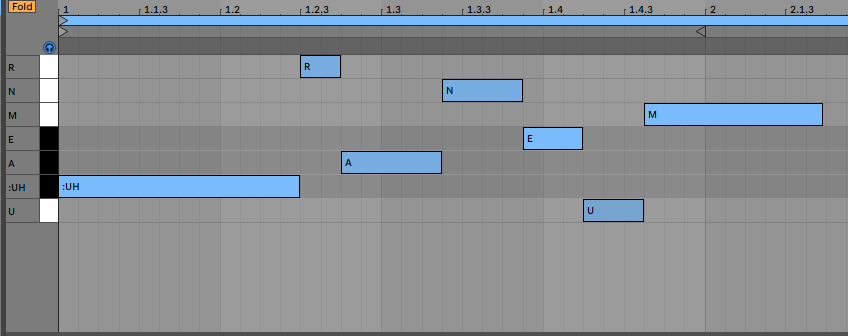
MIDI note ON note OFF mapped to the SC02’s phonemes
Velocity
Pitch (coarse control by clocking the chip)
CC2 Note Pitch (fine control using the chip inflection/pitch register)
Mod Wheel mapped to filter
CC 64 sustain ON/OFF to choose between the internal and external carrier
Emy / Terminal EMY Firmware
The code runs on Terminal or Emy. It comes in 2 versions, depending on how you want to sequence it. You can drive it either as a USB MIDI instrument or via a classic MIDI serial TRS connector. The code also allows CV controls so it can be used in a Eurorack setting
Here are a few Kraftwerk covers made by Andrew Shaw. These are astonishing variants of the original ones: respectful to the original songs but with their specificities or identities.
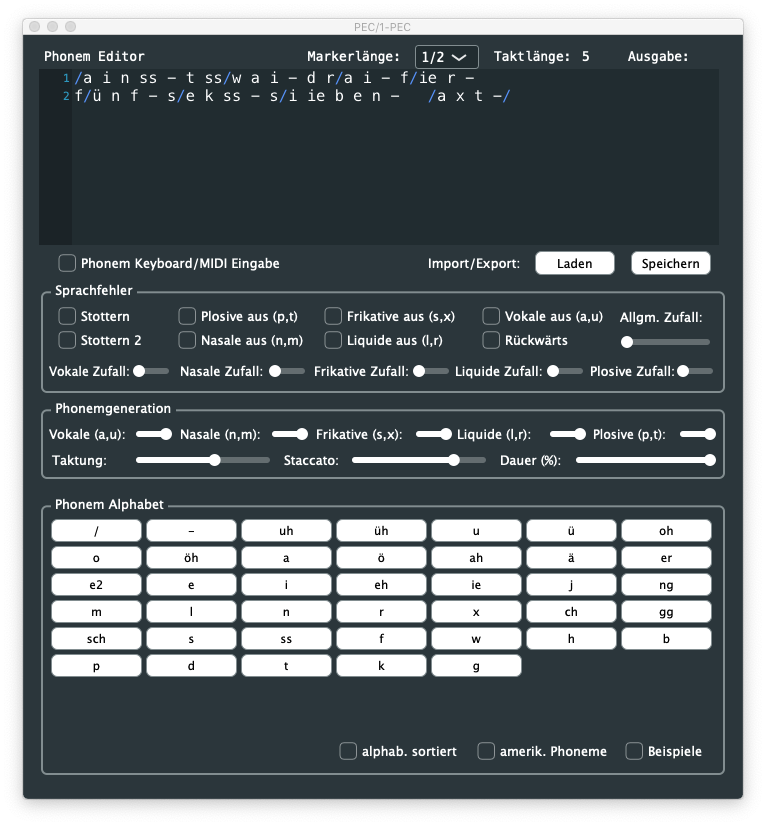
Andrew is using the Robovox precisely as Kraftwerk used to do: first by finding the correct phonemes to be uttered, then launching them in perfect timing and duration, and finally tuning the pitch to have the chip sing in tune! ( all parameters sent live to the Robovox from within the DAW)
The casing allows adding any of the Vox modules inside just by removing four screws.
As with Emy, Terminal can be used in a CV-controlled environment or act as a MIDI instrument.
You can install the various firmware on the SD card before powering the device.
A pair of shunts allows the user to connect Terminal either as a MIDI USB unit or as a host for a USB keyboard for text entry.
On request, a serial TRS jack MIDI Type B connector can also be added. (note: not all firmware are supporting MIDI yet. MIDI support is under development)
100 % Emy compatible, including adding additional voices USB port for power or MIDI or USB connection Optional TRS jack MIDI Type B connector USB host connector for computer keyboard Shunts (must be removed when connecting a keyboard, otherwise, they must be placed vertically) Line in & out stereo jack 1/4″ (line in only used for the Robovox module) Trimpot to adjust the audio level input (only used for the Robovox module)
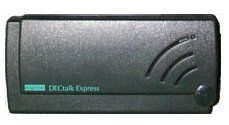
Dectalk was a speech synthesizer and text-to-speech technology developed by Digital Equipment Corporation in 1984, mainly based on the work of Dennis Klatt at MIT.
The Dectalk Express what connected to the serial port and would speak what was being “printed.”
The synthesizer can process text and produce speech with nine different voices. The Dectalk engine includes a parser that gives users fine control over the synthesized speech’s quality, pitch, and intonation. Dectalk can also be programmed to play phonemes and sing with quite a realistic expression.
The command syntax for musical coding sequences is:
[phoneme<duration, pitch number
Timing
Latency
There is a latency of 200 ms between the trigger and the start of the speech. This latency is very consistent, allowing the speech to stay in the tempo even if not precisely on the beat. The firmware uses the gate going down to stop the speech, preparing the chip for the next utterance, so when sequencing some stutter-like speech in a loop, they still fire up in sync with the tempo.
Real-time The various voice parameters are applied just before triggering the speech and are ineffective while speaking. They are applied to the next utterance. The best is to fiddle a bit with the knobs for the desired effects.




 100 % Emy compatible, including adding additional voices